Quick identification facts
Dog Tick Seasonality & Risk Checker
Use this checklist to evaluate whether current environmental factors and seasonal timing place your dog at elevated risk for tick encounters.
When Do American Dog Ticks Emerge in Spring?
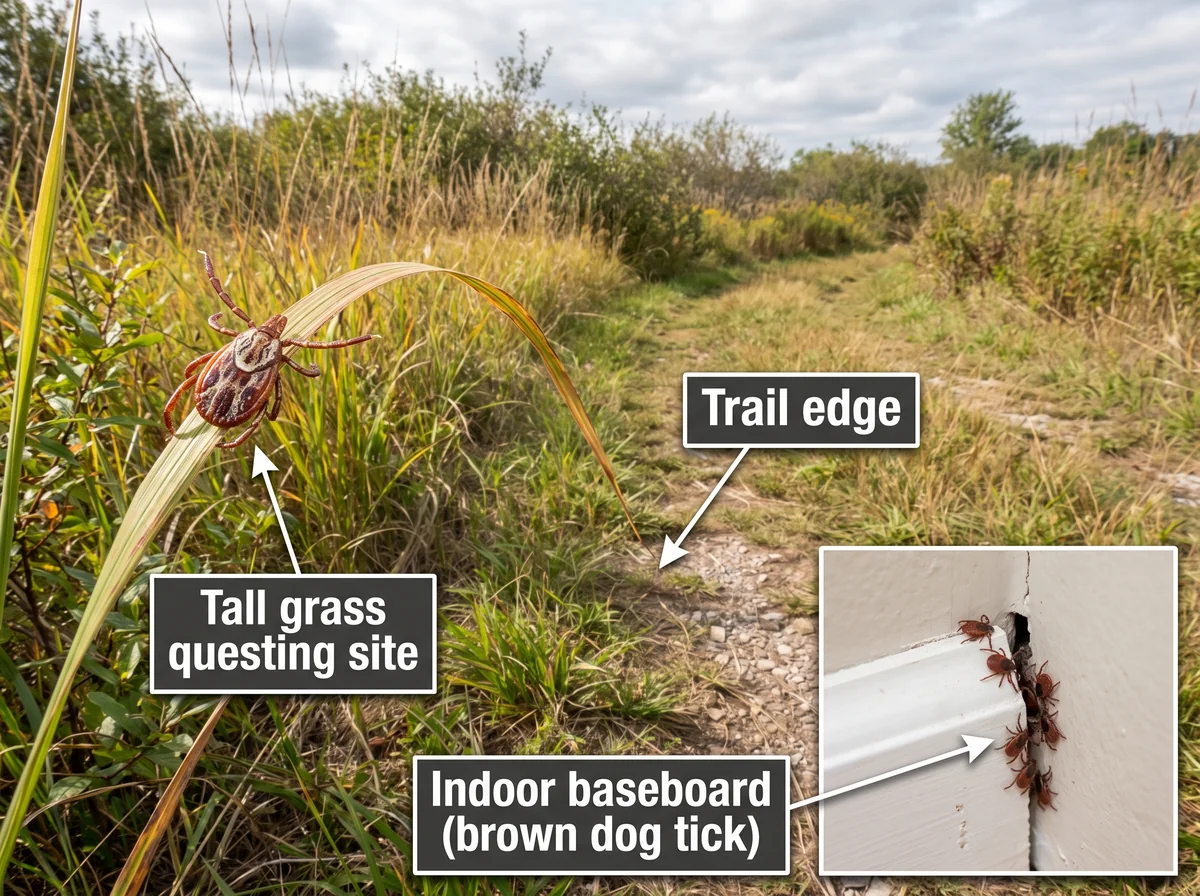
Adult American dog ticks typically begin emerging in mid-April as spring temperatures rise across fields and brushy trails. When you walk your dog along grassy paths during early spring, hungry adults start climbing low vegetation to seek a passing host. This early seasonal push marks the start of active questing that steadily builds in intensity over the subsequent weeks.
Nymphs of the American dog tick can be found slightly earlier in the year, starting around March. You might not notice these smaller stages right away because they feed on small rodents rather than large pets. Their activity continues through October, providing a wide developmental window before colder autumn weather slows them down.
Outdoor conditions drive this spring surge across rural and suburban trails. As you inspect your clothing or pet after early seasonal hikes, remember that tick numbers ramp up quickly between mid-April and early May. Preparing your prevention routine before this spring window opens helps minimize accidental exposure on daily neighborhood walks.
A related clue is covered in Dog Tick Habitat: Where Does It Live?.
Why Do May and June Bring Peak Numbers?
Peak adult American dog tick activity occurs throughout May and June across many regions. During these late spring and early summer months, the highest concentrations of questing adults wait on grass tips and shrubs for potential hosts. You are far more likely to encounter ticks on your dog during this two-month window than at any other time of year.
Nymph populations also reach their highest numbers in June, intensifying the overall presence of ticks in overgrown outdoor habitats. When you hike near meadow edges, tall weeds, or wooded borders, multiple life stages are actively searching for meals. This convergence makes late spring the most critical time for regular physical checks on your pets.
Activity begins to taper down slightly as summer progresses, but ticks remain present. By maintaining daily body checks throughout May and June, you can spot and remove questing ticks before they successfully attach and complete their blood meals on your animals.
If you want a second reference, BugKnow’s dog tick page covers the same topic from another angle.
How Late into Autumn Can You Find Outdoor Ticks?
Adult American dog tick activity extends into early August and early September before declining sharply. As summer heat gives way to late-season weather, fewer adults quest along trail margins. However, you can still encounter isolated adult ticks during late summer outings in dense brush and unmanaged fields.
Nymphs remain active in small numbers until October, quietly cycling on local wildlife hosts. Even if you notice fewer ticks hitching a ride on your dog during late autumn walks, the seasonal cycle does not completely stop until sustained cold weather arrives across northern and temperate areas.
Survival without a host also plays a key role in their persistence. American dog ticks can survive up to two years without feeding if environmental conditions permit. This resilience means that ticks failing to find a host during late summer can endure until the next warm season arrives.
A related clue is covered in Dog Tick Life Cycle: How Does It Develop?.
Can Brown Dog Ticks Remain Active Year-Round Indoors?
Unlike species restricted to outdoor fields, brown dog ticks favor indoor environments where temperatures remain stable. Because climate-controlled structures protect them from winter freezing, brown dog ticks can remain active year-round inside homes, kennels, and boarding facilities. You may encounter questing ticks indoors regardless of the outdoor month or freezing temperatures.
Their indoor preference allows all life stages to thrive in domestic settings where dogs sleep and rest. When an infestation establishes inside baseboards, kennels, or furniture crevices, the pests do not undergo a winter dormancy period. You might spot active crawling ticks during January just as easily as during mid-summer.
In warm southern regions such as Florida, this continuous activity is even more pronounced. In these mild climates, the brown dog tick's life cycle can occur year-round both indoors and in outdoor kennels, eliminating any seasonal break in pest pressure for pet owners.
How Should You Adjust Checks Throughout the Year?
Adjusting your routine based on seasonal habits helps you stay ahead of potential infestations. From mid-April through early September, focus your efforts on checking your dog immediately after outdoor walks through high grass, meadow borders, and woodland edges. Pay close attention around the ears, neck, and paws where ticks frequently climb aboard.
For indoor spaces, maintain vigilance throughout the entire year if your dog spends time in shared kennels or daycare facilities. Inspect bedding, resting mats, and nearby wall gaps regularly to ensure brown dog ticks have not established an indoor breeding cycle during the colder winter months.
Pairing timely visual inspections with consistent habitat management reduces exposure across all seasons. Keeping lawn grass trimmed short during the May to June peak limits outdoor questing sites, while routine indoor vacuuming removes stray ticks before they establish a permanent presence inside your living quarters.
For another part of the identification, open Dog Tick Prevention: How Can You Avoid It?.
Related identification guides
Dog Tick Life Cycle: How Does It Develop?
understand the egg-larva-nymph-adult stages and how long the cycle takes
habitatDog Tick Habitat: Where Does It Live?
understand where dog ticks live outdoors and how dogs pick them up
preventionDog Tick Prevention: How Can You Avoid It?
find general, safe ways to prevent ticks on dogs
signsRemoving a Tick from a Dog: What Should You Know?
find safe general guidance for removing an attached tick from a dog
Frequently asked questions
What is the single most active month for dog ticks?
For the outdoor American dog tick, June represents the overall height of seasonal activity. Both adult ticks and nymphs reach peak numbers during this month. If you walk your dog near tall grasses or brush during June, you face the highest annual likelihood of encountering questing ticks along trail edges and field borders.
Do cold winter temperatures kill off all dog ticks?
Cold weather does not eliminate all dog ticks. American dog ticks can survive up to two years without feeding, remaining dormant in sheltered outdoor leaf litter until spring. Meanwhile, brown dog ticks avoid cold entirely by living inside heated homes and kennels, allowing them to stay active and feed throughout the winter.
Are brown dog ticks seasonal like American dog ticks?
No, brown dog ticks do not follow the strict outdoor seasonal peaks of American dog ticks. Because they prefer indoor habitats, brown dog ticks remain active year-round in homes and kennels. In warm climates like Florida, their entire life cycle continues uninterrupted through all twelve months, both indoors and in sheltered outdoor runs.
When should I start checking my pet for ticks in spring?
You should begin checking your dog in March and April. American dog tick nymphs become active in March, while adults emerge around mid-April. Starting daily checks early in the spring ensures you catch ticks as soon as rising temperatures stimulate their initial search for a blood meal.