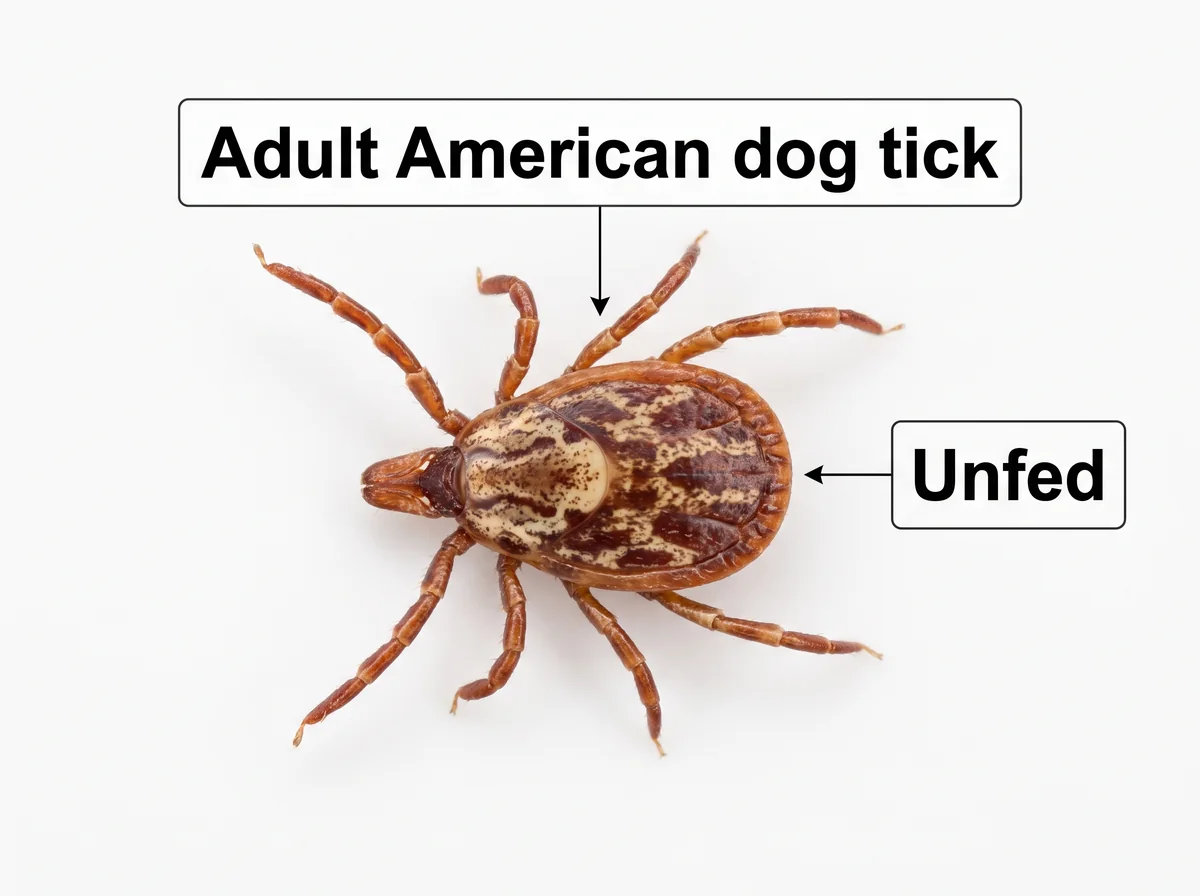
Quick identification facts
Brown Dog Tick Identification Checklist
Use these visual and situational checkpoints to determine whether the tick you found is a brown dog tick.
What Color and Markings Should You Look For?
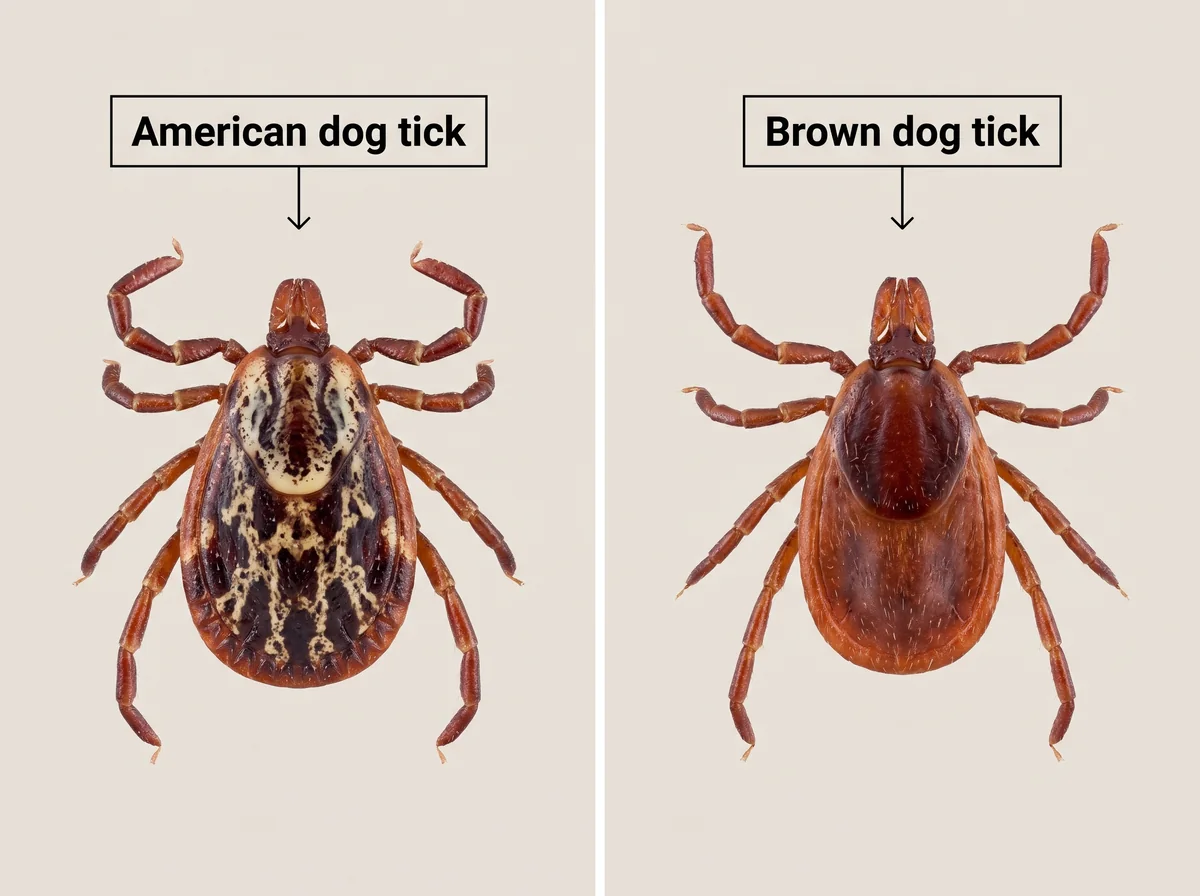
When you examine a brown dog tick under good light, you will notice a solid, uniform reddish-brown color across its entire body. Unlike the American dog tick, it never displays cream, white, or gray mottled patterns on its back. This plain, unpatterned appearance is the most reliable visual clue for separating it from other common outdoor tick species you might encounter.
The hard shield on the back, known as the scutum, differs noticeably depending on the sex of the tick you find. On adult males, this shield covers the entire top surface of the body, giving the tick a rigid, solid brown shell. On adult females, the scutum is much smaller, covering only a short section directly behind the mouthparts so her body can stretch during feeding.
Younger stages show this same plain coloration on a smaller scale. When you inspect an unfed nymph or adult, you will count eight slender legs extending from the dark body. Larvae, which hatch directly from eggs hidden in structural crevices, possess only six legs but share the same uniform brownish tone without any contrasting pale patches or ornate dorsal shields.
- Solid reddish-brown body with no mottled cream or white patterns
- Male scutum covers the entire back, while the female scutum sits just behind the mouthparts
- Larvae feature six legs, whereas nymphs and adults have eight
This also connects with American Dog Tick Identification: What Does It Look Like?.
How Big Is a Brown Dog Tick Before and After Feeding?
An unfed adult brown dog tick measures up to roughly a quarter inch in length, making it clearly visible to the naked eye when crawling across light carpeting or bedding. At this stage, its body remains flat and teardrop-shaped. This compact profile allows it to crawl easily through pet fur and squeeze into extremely tight wall crevices around your living spaces.
Once an adult female begins to feed on blood, her size and shape change dramatically over several days. Her body stretches and swells as she consumes a meal, eventually reaching half an inch or larger in length. An engorged female turns a dull, swollen gray-brown color and loses her flattened shape, resembling a smooth, rounded bean clinging tightly to a host's skin.
Immature stages are significantly smaller and far easier to overlook when you check your pets. Larvae appear as tiny, pinhead-sized specks when they first emerge and search for a host. Nymphs are roughly intermediate in size, appearing about twice as large as larvae, and both immature stages can bite dogs or people repeatedly while remaining unnoticed in heavy fur.
- Unfed adults measure up to approximately 1/4 inch long with a flat profile
- Engorged females expand to 1/2 inch or larger, taking on a swollen appearance
- Larvae and nymphs range from pinhead-sized specks to slightly larger flat brown bodies
A related clue is covered in Dog Tick Habitat: Where Does It Live?.
To compare this detail with another source, Insectio’s dog tick appearance page offers a useful cross-check.
How Does It Differ from the American Dog Tick?
Telling these two common pests apart is straightforward once you focus on dorsal markings and color contrast. The American dog tick features bold, decorative cream or off-white patterns across its scutum, contrasting sharply with its dark reddish-brown body. In contrast, the brown dog tick has no decorative white markings whatsoever, remaining consistently plain across every section of its shell.
Physical proportions and shield coverage also provide clear visual contrasts between the two species. A female American dog tick displays a bright, off-white shield that covers only the front third of her body against a dark background, while her male counterpart has diffuse, mottled cream-and-gray lines across his back. Brown dog ticks lack these pale shields entirely, showing only solid brown plates.
Their primary environments create an equally striking difference in where you will encounter them. American dog ticks thrive strictly outdoors along forest borders, tall grass trails, and overgrown fields, depending on wild rodents for their early life stages. Brown dog ticks, however, adapt seamlessly to indoor living spaces, establishing breeding populations inside private homes, dog runs, and commercial boarding kennels.
- Brown dog ticks lack the cream or off-white mottled patterns found on American dog ticks
- American dog ticks possess ornate, contrasting shields behind their mouthparts
- American dog ticks live along outdoor trails, whereas brown dog ticks readily colonize indoor rooms
You can check the same detail against Dog Tick Diseases: What Should You Know?.
Where Can You Spot Brown Dog Ticks Indoors?
The brown dog tick is unique among North American ticks because it can complete its entire life cycle indoors. While other species dry out and die in heated buildings, this tick thrives in human dwellings. You can find active ticks year-round inside homes, veterinary clinics, and boarding kennels, regardless of how cold or harsh the weather is outside.
When ticks drop off your pet to digest their blood meal or molt into the next life stage, they seek out dark, narrow hiding spots. You will typically find them tucked along baseboards, behind window and door moldings, inside wall gaps, or hidden within the seams of upholstered furniture. Dog beds, crates, and nearby carpet edges are prime gathering areas for every active stage.
Because dogs serve as the primary host for larvae, nymphs, and adults alike, a small introduction can quickly expand into an indoor infestation. Larvae and nymphs often climb vertical surfaces after feeding, gathering near ceiling corners or behind picture frames. Finding multiple plain brown ticks of varying sizes inside your home strongly points to an established indoor brown dog tick population.
- Able to complete all life stages indoors, surviving year-round inside heated rooms
- Hides behind baseboards, door frames, wall cracks, and within pet bedding
- Feeds on domestic dogs across larval, nymphal, and adult life stages
A related clue is covered in Dog Tick vs Deer Tick: What's the Difference?.
What Geographic Range and Health Concerns Apply?
You can encounter the brown dog tick virtually anywhere, as it maintains a worldwide distribution across warm and temperate regions. In the United States, it is established throughout all fifty states, including Hawaii. In colder northern regions such as the Northeast, the tick survives almost exclusively within the sheltered, climate-controlled environments of private residences and commercial dog kennels.
This species presents notable health concerns for both domestic canines and human family members sharing an infested living space. Brown dog ticks are recognized vectors for canine pathogens, including canine ehrlichiosis, which can cause serious illness in pets. When tick numbers rise indoors, they may also bite humans and transmit Rocky Mountain spotted fever in certain regions.
Regularly inspecting your dog after visits to kennels, grooming facilities, or dog parks helps you catch these parasites before an indoor population takes hold. Focus your search around your dog's ears, neck, belly, and between their toes. Promptly removing attached ticks and consulting a veterinarian about preventive treatments keeps your pets protected and prevents breeding indoors.
- Found worldwide, across all fifty US states and Hawaii
- Survives cold northern climates by living exclusively indoors and in kennels
- Capable of transmitting Rocky Mountain spotted fever and canine ehrlichiosis
A related clue is covered in Wood Tick vs Dog Tick: What's the Difference?.
Related identification guides
American Dog Tick Identification: What Does It Look Like?
identify the American dog tick specifically by color, shield pattern, and size
comparisonDog Tick vs Deer Tick: What's the Difference?
tell a dog tick apart from a deer tick
habitatDog Tick Habitat: Where Does It Live?
understand where dog ticks live outdoors and how dogs pick them up
harmDog Tick Diseases: What Should You Know?
learn what diseases dog ticks can transmit and how serious they are
Frequently asked questions
Can brown dog ticks live and reproduce inside my home?
Yes, brown dog ticks are fully capable of completing their entire life cycle indoors. Unlike most tick species that require outdoor humidity and wild animal hosts, all three active stages of the brown dog tick readily feed on domestic dogs. After feeding, they drop off to hide, molt, or lay eggs inside wall gaps, baseboard crevices, and pet bedding, creating persistent indoor infestations.
How can you tell a male brown dog tick from a female?
You can distinguish them by inspecting the hard shield, or scutum, on the back. On an adult male brown dog tick, the rigid shield covers his entire upper body surface. On an adult female, the shield covers only a small area directly behind the mouthparts. This smaller shield leaves the rest of the female's body flexible so it can swell significantly during feeding.
Do brown dog ticks bite humans as well as pets?
While domestic dogs are their strongly preferred host across all life stages, brown dog ticks will bite humans when living in close quarters. In heavily infested homes or kennels where tick numbers are high, ticks seeking a host may crawl onto people, creating a risk for transmitting pathogens such as the bacteria responsible for Rocky Mountain spotted fever.
Why do I see different sizes of brown ticks in my house?
Finding multiple sizes of plain brown ticks indoors indicates an active breeding population with overlapping life stages. Tiny pinhead-sized larvae with six legs, slightly larger eight-legged nymphs, and quarter-inch adults often coexist within the same room. People frequently mistake these different developmental stages for multiple distinct pest species infesting their baseboards, dog beds, and walls.