Quick identification facts
Yard and Pet Tick Risk Checklist
Use this checklist to evaluate whether your daily routine and outdoor spaces have proper tick prevention barriers in place.
How Do Regular Body Checks Protect Your Dog?
Conducting a thorough visual check after spending time in grassy or wooded areas helps you spot ticks before they firmly bite. Unfed adult ticks crawl along the fur for hours searching for warm, hidden feeding sites. By running your hands through your pet's coat right after an outing, you can remove loose ticks before they ever anchor into the skin.
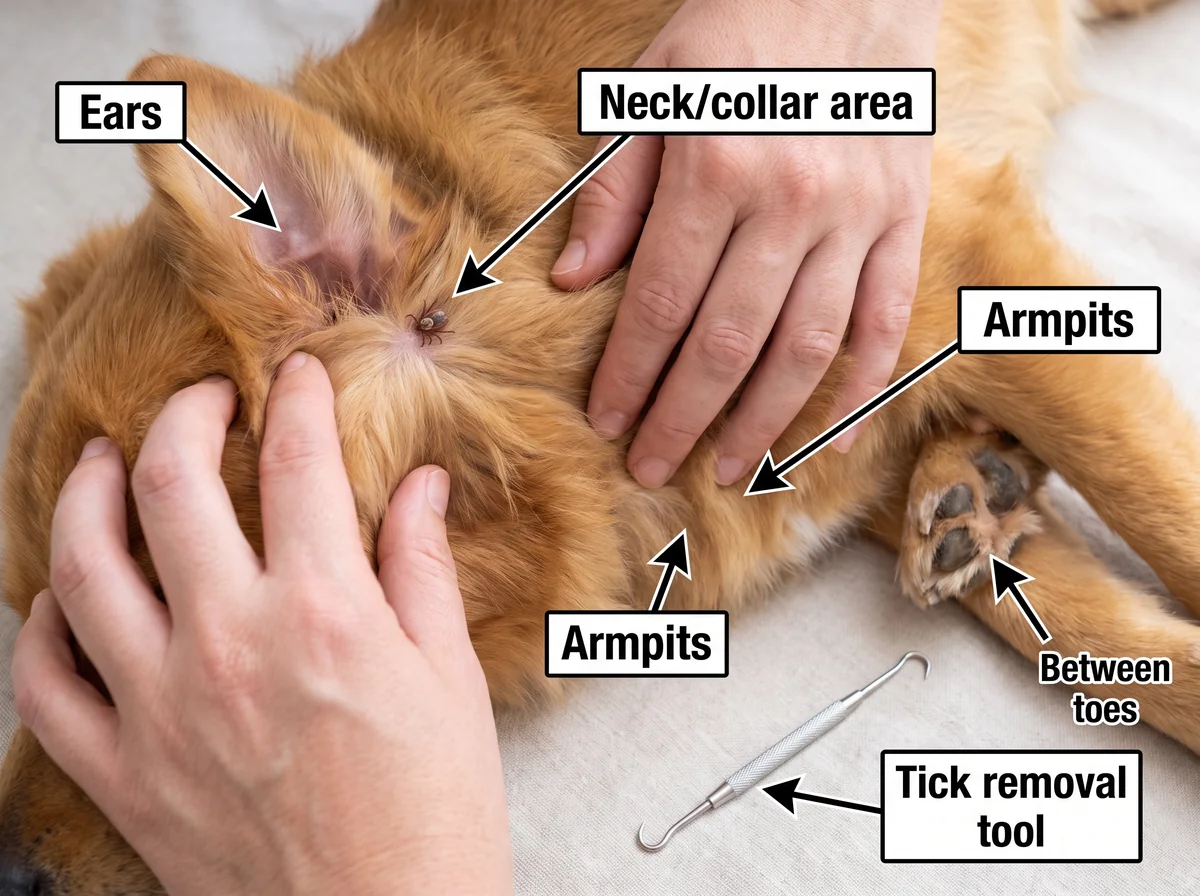
Ticks often target specific zones where the skin is thinner and harder for animals to groom. You should look closely around your pet's ears, under the collar, between paw pads, along the groin, and near the tail base. An unfed male or female American dog tick appears reddish-brown and flat, making it easier to feel with fingertips than to see in thick fur.
Adult females take substantial blood meals over several days, eventually expanding into large gray objects resembling dark pinto beans. Spotting them early prevents this full engorgement cycle entirely. Making checks an everyday habit after walks guarantees that any stray pest brought home from brushy paths gets caught before causing trouble in your living spaces.
- Feel along warm zones such as under the collar, behind ears, and between toes.
- Examine the coat immediately after returning from tall grassy trails.
- Look for small reddish-brown crawling crawlers before they attach to skin.
This also connects with How to Check Your Dog for Ticks?.
What Yard Changes Help Reduce Tick Encounters?
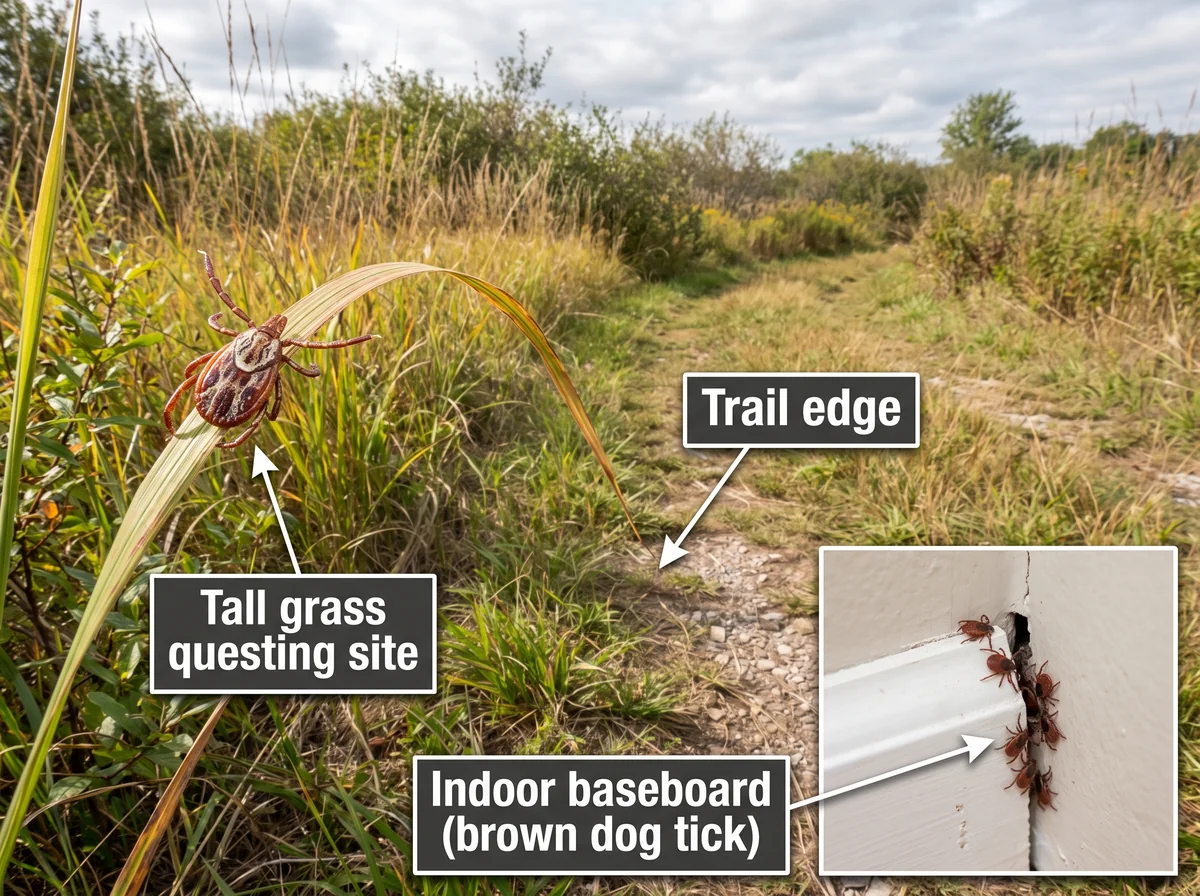
Ticks rely on moisture and shade to survive, drying out quickly when exposed to direct sun and open air. You can naturally reduce pest numbers in your yard by keeping grass cut short and trimming back overgrown shrubbery along fences. Removing leaf piles and tall weeds clears away the humid shelter that crawling pests use while waiting for passing hosts.
Creating a clear buffer zone between wooded property lines and your lawn helps discourage tick movement. Ticks avoid crossing dry, sunny borders made of gravel or wood chips. Keeping play equipment, pet runs, and patio furniture away from dense woodland edges limits the exposure your pets face during everyday backyard play.
Reducing overgrown vegetation also discourages the small wildlife hosts that carry immature stages into your yard. Larvae, which have only six legs, and eight-legged nymphs thrive in undisturbed ground cover before maturing. Maintaining tidy borders minimizes the sheltered nesting sites these wild rodents depend upon near your home.
- Mow turfgrass regularly to eliminate damp, shaded microclimates.
- Clear fallen leaves and dense brush away from frequently used yard borders.
- Create dry gravel or woodchip barriers between lawns and wooded tree lines.
For the next useful comparison, see Dog Tick Habitat: Where Does It Live?.
For another set of photos and notes, BugKnow’s dog tick prevention page is worth comparing.
Why Is Veterinary Tick Control Essential for Pets?
Veterinary-directed tick treatments provide a baseline of defense that physical checks alone might miss. Dogs running through tall grass brush against foliage where hungry pests wait with outstretched front legs. While outdoor grooming removes many crawlers, consistent preventative care recommended by your veterinarian helps protect pets against species like the brown dog tick.
Unlike outdoor-dwelling ticks, the brown dog tick can establish populations inside indoor structures, kennels, and homes. Because adult brown dog ticks lack distinctive mottled white marks and remain uniformly reddish-brown, they can hide subtly in household crevices. Maintaining routine preventive treatments protects your dog from continuous exposure across all active seasons.
Consulting your veterinarian ensures your pet receives an option suited to their weight, lifestyle, and regional pest risks. Pair these professional preventive plans with your manual inspections for complete coverage. This dual approach stops outdoor hitchhikers from turning into lingering indoor infestations.
- Consult a veterinarian to choose appropriate preventative options for your dog.
- Maintain continuous coverage to defend against indoor-adapting brown dog ticks.
- Combine professional products with routine manual inspections after walks.
How Should You Protect Yourself Outdoors?
When you walk through wooded edges or overgrown fields, wearing protective clothing reduces skin exposure. Choose light-colored fabrics so crawling ticks stand out immediately against your pants or socks. Tucking pant legs into tall socks creates a physical barrier that prevents pests from finding exposed ankles as you walk along trail borders.
American dog ticks climb up low vegetation and latch onto clothing as you brush past leaves. Staying in the center of cleared hiking trails keeps you from contacting the tall weeds where adult ticks perch. Once you return indoors, inspect your own gear, boots, and clothing carefully before sitting down.
Placing outdoor clothes straight into a hot dryer can eliminate hidden ticks lurking in seams. Pair these clothing habits with quick personal skin checks around your hairline, waistband, and behind your knees. Protecting yourself ensures you do not accidentally bring active ticks indoors where they might later transfer to your pets.
- Wear light-colored clothing so dark, crawling pests remain easy to see.
- Tuck pant cuffs into socks to block direct skin access near trail brush.
- Stay centered on cleared paths to avoid brushing against overhanging grasses.
For the next useful comparison, see Dog Tick Season: What Should You Know?.
Why Does Prompt Tick Removal Matter?
Removing an attached tick quickly is one of the most effective steps you can take to reduce the risk of contracting a tick-borne disease. Pathogens causing illnesses such as Rocky Mountain spotted fever and tularemia require time to transfer once feeding begins. Prompt extraction interrupts this transfer window before harmful organisms enter the bloodstream.
When inspecting your dog, run your fingers down to the skin surface to detect tiny bumps that might indicate an embedded mouthpart. Adult male American dog ticks have a scutum covering their whole back with diffuse cream marks, while females have a smaller shield covering only the front third. Both require prompt removal regardless of sex or life stage.
Keep fine-tipped tweezers accessible in your grooming or outdoor kit so you can act the moment you spot a tick. Grasp the pest close to the skin and pull upward with steady, even pressure without twisting. Clearing the tick immediately protects your dog from prolonged feeding and localized skin irritation.
- Extract attached ticks immediately to lower potential pathogen transmission risks.
- Feel beneath your dog's topcoat down to skin level to catch small attached bumps.
- Use fine tweezers to pull steadily upward without crushing the pest's abdomen.
For the next useful comparison, see Removing a Tick from a Dog: What Should You Know?.
Related identification guides
How to Check Your Dog for Ticks?
learn a practical method for inspecting a dog's body for ticks
habitatDog Tick Habitat: Where Does It Live?
understand where dog ticks live outdoors and how dogs pick them up
seasonalityDog Tick Season: What Should You Know?
learn the seasonal activity pattern of dog ticks
signsRemoving a Tick from a Dog: What Should You Know?
find safe general guidance for removing an attached tick from a dog
Frequently asked questions
Can regular tick checks completely replace veterinary treatments?
No, manual checks work best as a partner to veterinary tick treatments rather than a replacement. While inspecting your dog catches many crawling or attached adult ticks, tiny six-legged larvae and poppy-seed-sized nymphs can easily hide in dense fur. Combining prescribed pet care with everyday physical checks provides a layered defense that catches pests before they feed.
Where do dog ticks wait for pets in the yard?
Dog ticks climb onto tall grasses, low shrubs, and overgrown weed borders along trail paths and property lines. They perch on plant tips with their front legs extended, waiting for an animal to brush past. Keeping your lawn cut short and clearing brush eliminates these prime waiting spots around your yard.
What is the safest way to remove a dog tick from fur?
Use fine-tipped tweezers to grasp the tick as close to your pet's skin surface as possible. Pull upward with gentle, steady pressure without twisting or squeezing the swollen body. Once removed, clean the bite area with soap and water or rubbing alcohol, and dispose of the tick securely.
Do adult male and female dog ticks pose the same risk?
Both male and female dog ticks attach to hosts and can transmit disease pathogens. While adult female American dog ticks feed heavily over several days and swell like large beans, adult males also bite and carry pathogens causing RMSF or tularemia. Both sexes should be removed immediately upon discovery.