Quick identification facts
Habitat Risk Assessment Checklist
Review your outdoor surroundings and indoor living spaces to determine your local dog tick encounter risk.
Where Do American Dog Ticks Wait Outdoors?
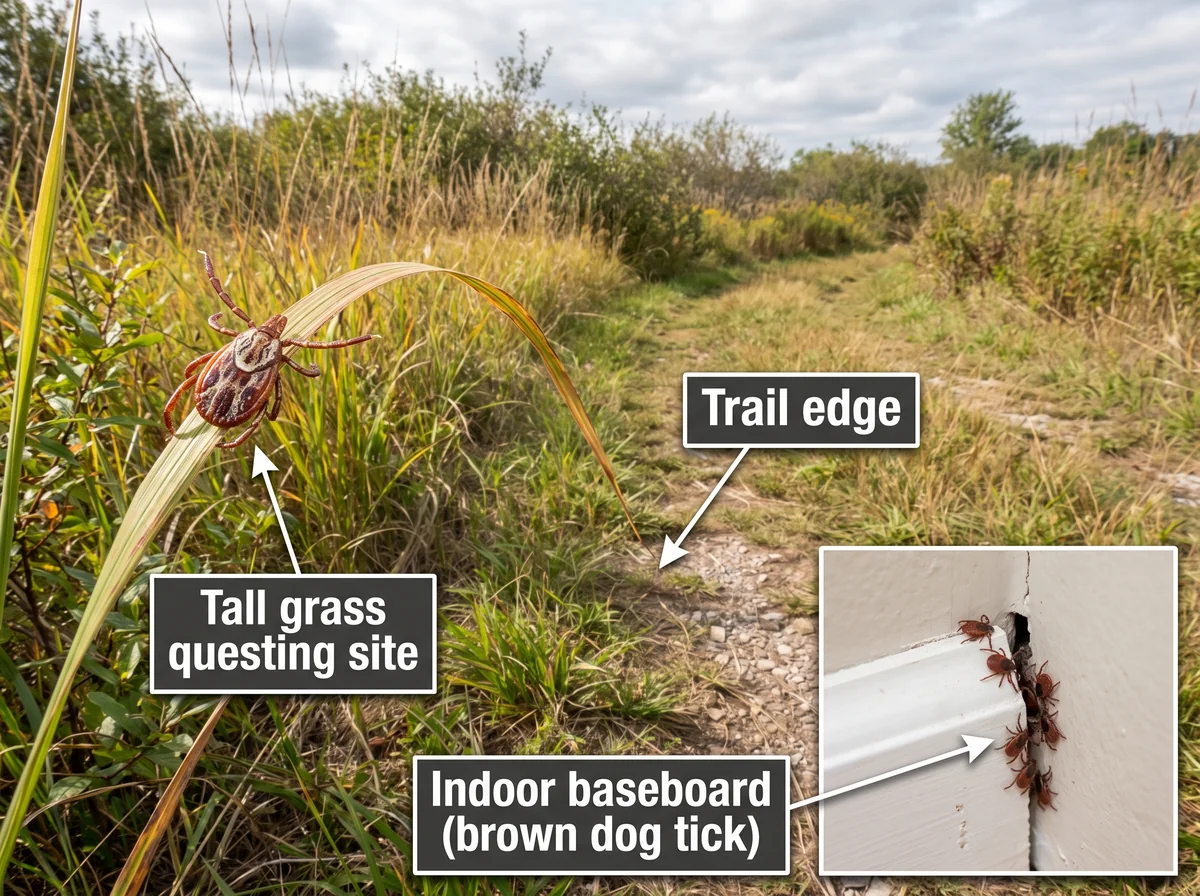
American dog ticks thrive in open, sunny spaces rather than deep, heavily shaded forest canopies. You will encounter them most frequently along grassy fields, open scrubland, and overgrown brush borders. They prefer areas with little to no tree cover where sunlight warms the ground cover throughout the day.
Trail edges and pedestrian walkways create prime waiting zones for hungry ticks. When you walk your dog along park paths, mowed hiking trails, or roadsides, ticks cling to tall grass blades. They wait on vegetation stems at ground level or knee height, ready to latch onto passing hosts.
These ticks position themselves where mammalian scent and regular foot traffic are strongest. Forest margins that meet open meadows give them access to diverse wildlife. Larvae and nymphs target small rodents in dense brush, while adult ticks climb higher up grass stalks to catch medium-to-large mammals.
- Unshaded grassy fields and meadow perimeters
- Overgrown brush along public hiking paths and sidewalks
- Transitional zones between open clearings and forest edges
A related clue is covered in Dog Tick Season: What Should You Know?.
What Is the Geographic Range Across North America?
The geographic range of the American dog tick spans a massive portion of North America. You can find established populations from the Atlantic coastal states westward all the way to the Rocky Mountain region. Their broad environmental tolerance lets them persist across diverse temperature and moisture gradients.
Separate populations also thrive along the Pacific coast of the United States. You will find them in suitable open habitats throughout California, Oregon, and Washington state. Their territory also reaches north into southern areas of Canada and southward across borders into Mexico.
Local density varies based on humidity, host availability, and vegetative cover in your area. Coastal zones and river valleys often support dense numbers due to favorable microclimates. Understanding your geographic region helps you gauge the likelihood of meeting this species during outdoor activities.
- Atlantic coast westward to the Rocky Mountain divide
- Pacific coastal zones across California, Oregon, and Washington
- Extended pockets within sections of Canada and Mexico
For another set of photos and notes, BugKnow’s dog tick page is worth comparing.
How Do Brown Dog Ticks Establish Themselves Indoors?
Brown dog ticks differ sharply from most North American ticks because they complete their entire life cycle indoors. While other species dry out and die inside climate-controlled structures, this tick thrives in human dwellings. You will find them establishing persistent populations inside heated houses, boarding facilities, and commercial dog kennels.
Once brought inside on a pet, these ticks seek out structural crevices to rest, hide, and lay eggs. You can spot them tucked behind wooden baseboards, within window and door moldings, and inside wall gaps. They also crawl into upholstered furniture seams and beneath dog bedding where your pet sleeps.
In northern climates, their indoor adaptation is especially pronounced. In the Northeast, brown dog ticks live almost exclusively indoors and inside canine housing facilities rather than in local fields. Their ability to shelter within structural cracks shields them completely from harsh outdoor winter conditions.
- Hidden crevices behind wooden baseboards and door frames
- Gaps in interior drywall, paneling, and structural moldings
- Seams of pet bedding, carpets, and upholstered living room furniture
For another part of the identification, open Brown Dog Tick Identification: What Does It Look Like?.
Which Wild and Domestic Hosts Share These Habitats?
The presence of suitable animal hosts directly shapes where tick populations settle and expand. Immature American dog ticks, including larvae and nymphs, focus their feeding on small ground-dwelling mammals. You will find high tick activity in brush where wild mice, voles, and chipmunks maintain active nesting runs.
As American dog ticks mature into adults, their host preference shifts toward larger mammals. Adult ticks seek out dogs, raccoons, opossums, and humans walking through their habitat. If your yard borders wild rodent territory, adult ticks will readily move into maintained lawn perimeters.
Brown dog ticks maintain a much narrower host focus across their development. Dogs serve as the primary host for all active life stages, from tiny six-legged larvae to full adults. This strong canine preference allows brown dog ticks to maintain continuous generational cycles entirely within a single home.
- Small wild rodents serving as hosts for young American dog ticks
- Medium-to-large outdoor mammals supporting adult American dog tick populations
- Domestic dogs acting as primary hosts for all brown dog tick life stages
Why Do Ticks Congregate Along Yard Borders?
Residential yards present distinct microhabitats where ticks either struggle or thrive. Short, manicured turf in direct sunlight often dries out too quickly for tick survival. However, the shaded perimeter where your lawn meets tall brush, woodpiles, or unmanaged ground cover offers ideal shelter.
Your dog naturally explores these perimeter zones, sniffing fence lines and brush borders during daily routines. As wildlife moves along property edges, ticks drop off into the leaf litter and wait for new hosts. This creates a high-contact transition zone right at the edge of your property.
Sidewalk edges, stone retaining walls, and walkway margins also serve as frequent ambush locations. Ticks take advantage of the vertical structure of tall grass edging concrete paths. Keeping these transition margins trimmed reduces the physical resting spots ticks rely on to contact your family.
- Property boundary lines where manicured lawns border dense scrub
- Vegetation margins directly flanking stone walls and paved walkways
- Leaf litter accumulations beneath ornamental boundary hedges
This also connects with Dog Tick Prevention: How Can You Avoid It?.
Related identification guides
Brown Dog Tick Identification: What Does It Look Like?
identify the brown dog tick and understand its indoor habits
harmDog Tick Diseases: What Should You Know?
learn what diseases dog ticks can transmit and how serious they are
preventionDog Tick Prevention: How Can You Avoid It?
find general, safe ways to prevent ticks on dogs
seasonalityDog Tick Season: What Should You Know?
learn the seasonal activity pattern of dog ticks
Frequently asked questions
Can American dog ticks survive and infest the inside of my house?
American dog ticks rarely survive indoors for long periods. They require higher ambient humidity and natural soil moisture to maintain their water balance. If your dog carries an adult American dog tick inside, the tick will search for a host or eventually dry out. They do not establish reproducing indoor infestations in your baseboards or carpets like brown dog ticks do.
Where does the brown dog tick live in North America?
Brown dog ticks live worldwide and occur across the entire United States, including Hawaii. Unlike ticks limited by regional outdoor climates, brown dog ticks thrive anywhere dogs live indoors. In cooler regions like the Northeast, they survive almost entirely within heated homes, veterinary clinics, and dog kennels, where indoor temperatures remain comfortable year-round.
Why do I find ticks along hiking paths instead of deep woods?
American dog ticks prefer open, sunlit areas with low tree cover over dense forest interiors. Trail edges provide both tall grass stems for perching and constant host traffic. Because deer, raccoons, dogs, and humans use clear paths through brush, ticks gather along these narrow walkway borders where host contact is most frequent.
What parts of my yard are ticks most likely to live in?
Ticks avoid short, open turf in full sun and gather in sheltered yard margins. Look for them in tall grass along property edges, unmanaged brush, woodpiles, and landscape borders where ornamental plants meet wild growth. These boundary zones provide the humidity ticks need while giving them access to passing wildlife.