Quick identification facts
Dog Tick Egg & Cluster Identifier
Use this checklist to evaluate whether a suspicious cluster found in your home, yard, or kennel matches the physical traits and habits of dog tick eggs.
What Do Dog Tick Eggs Look Like?
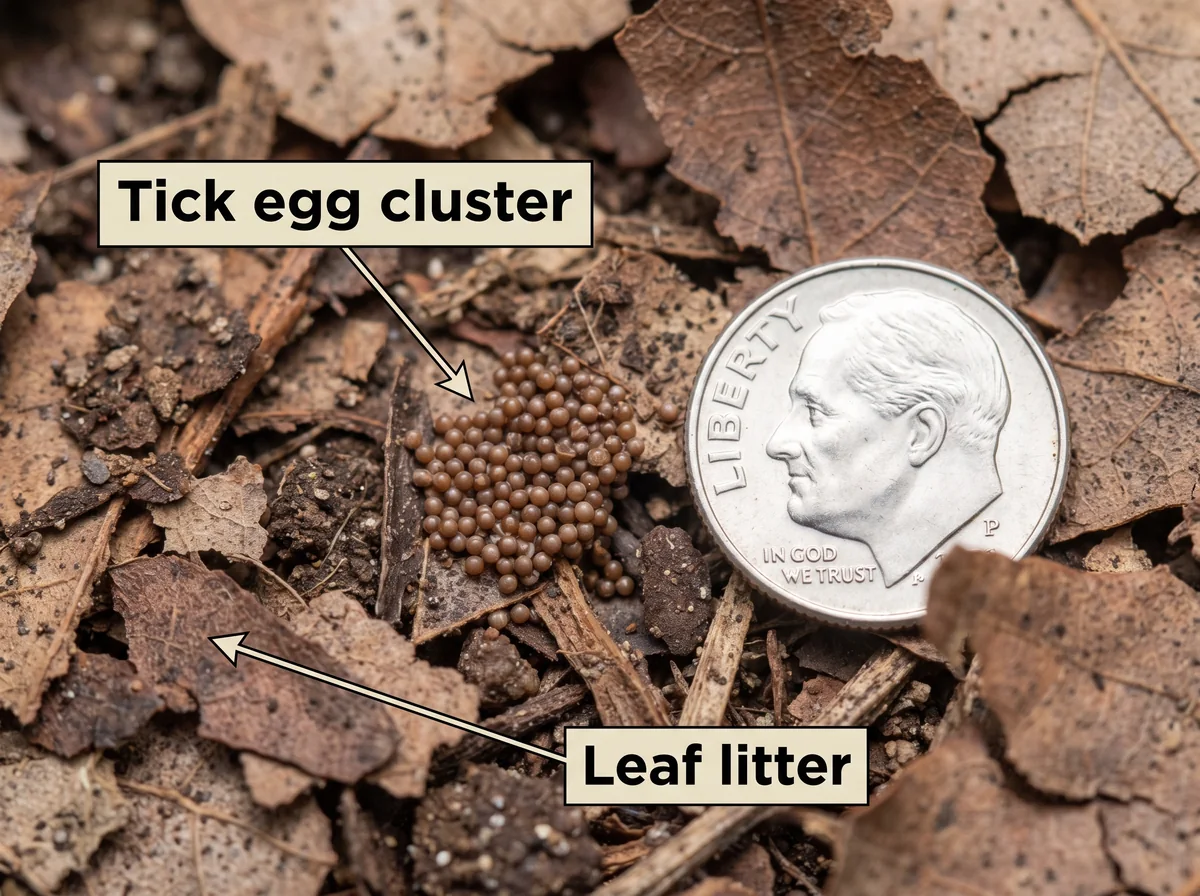
Dog tick eggs look like tiny, translucent-to-brownish beads grouped together in a dense cluster. An individual egg is minuscule and oval, but female ticks lay them in a tight mass rather than spreading them out singly. When you look closely at a fresh cluster, the mass often has a glossy, slightly moist sheen that keeps the eggs sticking together in surface debris or quiet corners.
The overall pile can look similar to a miniature cluster of caviar or fine seeds resting on the ground. Individual eggs lack legs, distinctive dorsal patterns, or hard shields. Because they are so small, you will rarely spot a single wandering egg. Instead, you will see a concentrated, dark amber or brownish heap left behind after the female completes her single egg-laying cycle.
Color can shift slightly as the eggs age and approach hatching. Newly laid eggs typically appear lighter and slightly translucent before darkening to a richer reddish-brown or earthy tone. You can distinguish them from adult ticks or nymphs because the eggs remain completely motionless, showing no scutum, mouthparts, or segmented body margins until the six-legged larvae eventually break out of their shells.
- Tiny, oval shapes clustered together in a distinct heap
- Translucent amber to dark reddish-brown coloration
- Glossy, moist surface texture holding the mass together
- Complete absence of legs, shields, or movement
This also connects with Dog Tick Life Cycle: How Does It Develop?.
Do Ticks Lay Eggs Directly on Your Dog?
A common worry among pet owners is finding a cluster of tick eggs attached to a pet's skin or coat. Female dog ticks do not lay their eggs directly on dogs, cats, or humans. An adult female requires a full blood meal to produce eggs, but she will always detach her mouthparts and drop away from the host animal before beginning the egg-laying process.
Once the fully engorged female falls off your pet, she seeks a sheltered, humid environment on the ground or within a structure. Laying eggs off the host protects the delicate cluster from being groomed off, crushed, or exposed to dry air. If you see small bumps or debris stuck to your dog's skin, you are likely looking at scabs, dirt, skin tags, or feeding ticks rather than eggs.
Understanding this habit can save you unnecessary worry during daily pet grooming. While you might find multiple adult ticks, nymphs, or tiny larvae feeding on your dog at the same time, the eggs themselves remain hidden in the surrounding environment. Your prevention efforts should focus on finding attached ticks on the coat and treating the places where pets rest.
- Adult females always detach and drop off before laying eggs
- Eggs are never glued to animal hair, fur, or human skin
- Debris on a dog is often scabs, plant matter, or attached ticks
- Egg clusters remain hidden in leaf litter or structural gaps
If you want a second reference, BugKnow’s dog tick eggs page covers the same topic from another angle.
Where Do Female American Dog Ticks Lay Their Eggs?
American dog ticks lay their eggs outdoors in sheltered, humid microhabitats that protect the clutch from drying out. After dropping from a large host such as a dog, raccoon, or human, the female crawls into thick leaf litter, tall grass bases, or decaying forest floor debris. In these quiet outdoor spots, she deposits her egg mass, typically during the late summer or fall months.
These outdoor habitats provide the stable humidity necessary for egg survival through temperature shifts. American dog ticks are especially common along forest edges, overgrown scrubland, grassy fields, and along walkways, trails, or sidewalks where hosts frequently pass. The female tucks her clutch into soil crevices or under rotting leaves where emerging larvae can easily encounter small mammal hosts.
Larvae hatch from these outdoor egg masses within the same season they are laid. Once hatched, the tiny six-legged larvae remain in the leaf litter and overwinter near the ground before emerging in spring to seek their first blood meal from mice, voles, or chipmunks. You will rarely encounter American dog tick eggs inside a clean, modern home because this species depends on outdoor ground cover.
- Thick outdoor leaf litter and decaying vegetative debris
- Grassy field edges, trail borders, and scrubby walkways
- Sheltered soil crevices that maintain moisture
- Outdoor sites near small mammal runs and burrows
For the next useful comparison, see Dog Tick Larvae and Nymphs: What Should You Know?.
Can Brown Dog Ticks Lay Eggs Inside Your Home?
Unlike American dog ticks, brown dog ticks are uniquely adapted to human dwellings and can complete their entire life cycle indoors. When an engorged female brown dog tick drops off your dog inside your home, she crawls away to find a warm, secluded void to lay her eggs. This ability allows brown dog tick populations to establish themselves indoors without needing outdoor vegetation.
Female brown dog ticks instinctively climb upward or crawl into tight spaces before depositing their eggs. You are most likely to find their egg masses tucked behind wooden baseboards, along window and door moldings, inside wall gaps, or beneath pet bedding. In kennels and homes, they readily use cracks in flooring, edges of carpets, and crevices around furniture where dogs rest.
Because all active stages of the brown dog tick can feed on dogs, indoor egg clusters can lead to continuous infestations if unaddressed. In regions like the Northeast, these ticks are found almost exclusively inside homes and dog kennels. Inspecting the seams of dog beds, baseboard crevices, and wall voids gives you the best chance of locating hidden indoor egg masses.
- Cracks and gaps behind baseboards and floor moldings
- Underneath and around seams of pet beds and resting mats
- Gaps around window frames, door casing, and wall paneling
- Quiet seams within upholstered furniture and kennel cages
You can check the same detail against Dog Tick Habitat: Where Does It Live?.
How Does the Egg Stage Fit into the Dog Tick Life Cycle?
The egg is the initial phase of a four-stage life cycle that includes the six-legged larva, eight-legged nymph, and adult. For the American dog tick, completing this entire progression normally takes about two years in nature, though it can range from roughly three months to three years depending on local conditions. Each stage after the egg must secure a blood meal to advance.
American dog ticks operate as three-host ticks, meaning every active stage feeds on a separate animal before dropping off to molt or lay eggs. Larvae and nymphs focus primarily on small rodents like mice and voles, while adults target larger mammals such as dogs and humans. The adult female feeds, mates, drops off, deposits her single massive clutch of eggs in surface debris, and then dies.
Brown dog ticks also pass through egg, larva, nymph, and adult stages, but they can feed on dogs at every active point. Under ideal laboratory conditions, their entire cycle can finish in as little as 54 days. Knowing that eggs represent only the start of this multi-stage cycle helps you recognize why targeting both the environment and the host is essential for control.
- Four distinct life phases: egg, larva, nymph, and adult
- Requires a blood meal at every stage after hatching to develop
- American dog ticks utilize three separate hosts across their cycle
- Adult females die shortly after laying their single egg mass
What Should You Do If You Spot a Suspected Egg Mass?
If you discover a suspicious cluster of tiny brown beads indoors or near pet kennels, avoid crushing the eggs with bare hands. Instead, use a paper towel, sticky tape, or a vacuum hose attachment to gather the entire mass cleanly. Crushing eggs directly against surfaces can smear fluid and leave tiny unhatched eggs scattered across floor gaps or fabric fibers.
After picking up the mass, seal the eggs tightly inside a plastic bag or container with rubbing alcohol to ensure they do not hatch. If you used a vacuum to clean baseboards, moldings, or carpet edges, immediately empty the vacuum canister or discard the vacuum bag into an outdoor trash can. Thoroughly wash your hands and clean the surrounding surface with standard household cleaner.
Following the removal of an indoor egg mass, inspect your pets and their sleeping areas for any adult ticks or crawling larvae. Wash pet bedding in hot water and dry it on high heat to destroy any hidden eggs or nymphs. If you found the cluster outdoors in leaf litter or garden beds, clearing away dense ground debris near your foundation helps deter females from laying near your entryways.
- Pick up egg clusters using adhesive tape or a vacuum hose
- Seal collected material in a plastic bag with rubbing alcohol
- Empty vacuum bags directly into an exterior trash receptacle
- Wash pet bedding in hot water and clean baseboard crevices
This also connects with Engorged Dog Tick: What Should You Know?.
Related identification guides
Dog Tick Life Cycle: How Does It Develop?
understand the egg-larva-nymph-adult stages and how long the cycle takes
appearanceEngorged Dog Tick: What Should You Know?
identify a full, blood-fed tick found on a dog
appearanceDog Tick Larvae and Nymphs: What Should You Know?
identify immature dog tick life stages that are often mistaken for other insects
habitatDog Tick Habitat: Where Does It Live?
understand where dog ticks live outdoors and how dogs pick them up
Frequently asked questions
How many eggs does an adult dog tick lay?
A single female dog tick lays thousands of eggs in one concentrated mass after dropping from her host. She deposits this large clutch over several days in a sheltered location such as outdoor leaf litter or an indoor baseboard crack. Once she finishes laying her entire egg mass, her energy is completely exhausted, and she dies shortly afterward.
How long does it take for dog tick eggs to hatch?
Dog tick eggs generally hatch within several weeks to a few months depending on ambient temperature and humidity. Outdoor American dog tick eggs laid during the late summer or fall hatch into six-legged larvae that same season. In warm indoor environments, brown dog tick eggs can hatch much more rapidly, allowing the life cycle to progress steadily year-round.
Can you see dog tick eggs without a magnifying glass?
While an individual dog tick egg is tiny and difficult to see on its own, the overall egg mass is readily visible to the naked eye. Because female ticks deposit thousands of eggs together in a dense, brownish cluster, the heap looks like a noticeable pile of tiny glossy beads or miniature caviar resting against surfaces or tucked within ground debris.
What is the difference between tick eggs and flea eggs on a dog?
You will never find tick eggs attached to your pet because ticks drop off to lay masses in leaf litter or crevices. Flea eggs, by contrast, are laid directly on your dog's skin and fur. Flea eggs are loose, smooth, white ovals that easily roll off into pet bedding, carpets, and furniture as your dog moves around the house.